The relationship between AI and SEO has evolved from a simple optimization game to an intelligent and complex partnership. Modern AI-powered search engines have fundamentally changed how content is discovered and ranked, shifting focus from keyword matching to understanding user intent and context. Instead of simply processing search terms, AI systems now interpret what users actually want to achieve and evaluate whether content provides genuine value.
Traditional SEO focused primarily on achieving high rankings through keyword optimization and technical tactics. Today's AI-enhanced search requires a more sophisticated approach that anticipates user needs, provides comprehensive answers, and delivers actionable insights. This shift demands a fundamental rethinking of content strategy, from what we write to how we structure information for maximum visibility and usefulness.
How AI Has Transformed Content Discovery and Ranking
The million-dollar question is: How does the search work now, and what must be done to remain visible to users in the age of AI?
Modern algorithms analyze more than just words on a page. They analyze the context to understand the actual request and optimize content to provide a solution. This refines the ranking process, affects content discoverability, and alters the definition of what ranking means.
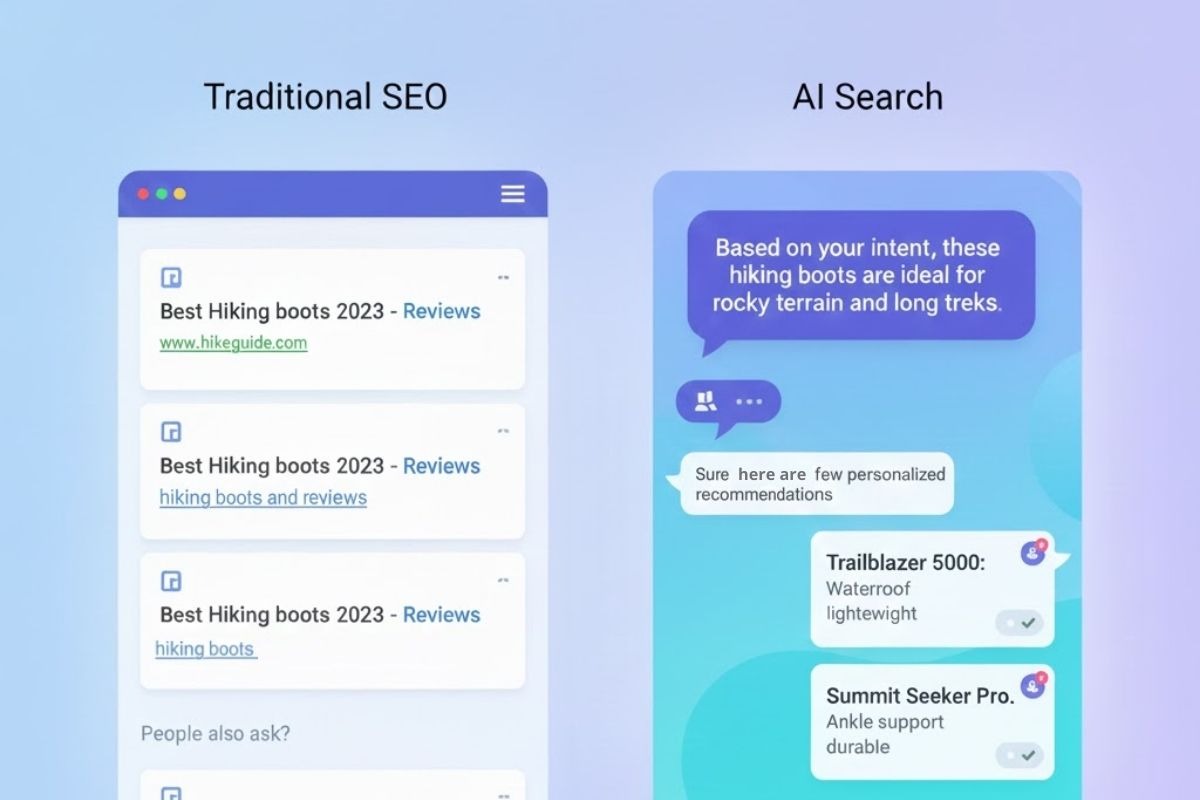
Moving From Keyword Matching to Intent Matching
The previous SEO model was mainly focused on the right keywords. Broadly speaking, inserting the right keywords in the right places, getting internal and external links in the appropriate context, and a page would rank. With AI search systems, the actionable intent of the searcher became the primary focus.
Consider a search like "best project management tool for remote teams." AI doesn't simply see this as a phrase to match artificially, but there are actually several interpretations, in the given example:
- How large is this team, and how is it organized?
- What are the potential hurdles of remote team collaboration?
- Is this user merely researching options, or are they more ready to purchase?
- Is this user on a tight budget, or do they have more financial flexibility?
Content that answers all of these questions and more is more likely to perform better than content that simply states "best project management tool for remote teams".
Less Imitative Profiles
Understanding AI search engine visibility becomes crucial. Instead of the classic list of blue links, users now often see AI-generated answers, completions, and summary panels placed at the very top of the results. The tension grows when those AI outputs closely paraphrase publisher content, occasionally appearing right above or alongside the source itself.
AI-generated content has started appearing more and more often. What we are getting soon is that the whole pages will start getting summarized without the user ever being aware of it.
AI is going to quote you even when you are not achieving traditional ranking in AI search results, hence you need to have as quality, complex, and contextually cross-linked content as possible. Organic search nowadays is definitely still about visibility on regular search engines, but more and more about visibility on AI searches.
Ranking signals now include usefulness and clarity
AI tends to favor content that is:
- Structured logically and easy to comprehend
- Straightforward and to the point
- Human-centric
- Knowledgeable
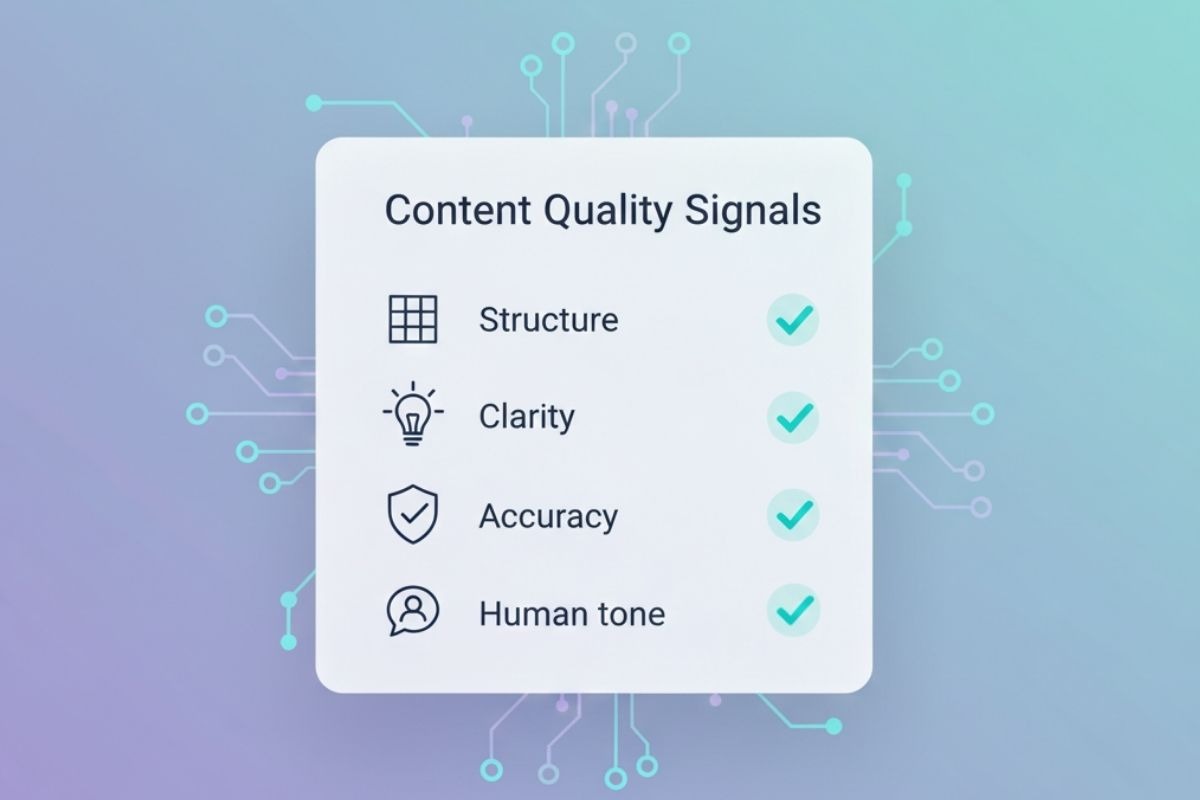
This is where SEO optimization for AI search becomes less about manipulation through tricks and more about quality signals that artificial intelligence can analyze and recognize when assessing content at scale.
AI’s Impact on the Meaning of SEO
SEO’s relationship with AI is the most profound to date. Effective optimization for AI organic search is less about actively trying to outsmart the algorithm and more about understanding the intelligent systems that analyze the content and how they process information.
Content intent matters more than format
Long-form content still ranks, but only when length is actually required. AI evaluates whether each subsection provides sufficient substance or is merely an empty placeholder.
Subsections that are inadequately constructed and filled with generic, pointless content are detrimental to your reputation (in other words, pushing you down on regular search engines, but also moving you away from AI search bots’ attention). Succinct responses, relevant examples, and well-defined structure are what is needed to build your reputation in the modern search environment.
Strong intent alignment means the following:
- Setting the problem straight from the start
- Answering the question straight from the beginning
- Providing additional details after the answer
- Ensuring that each idea leads to the next in a cohesive manner
- Replacing keyword density with semantic depth
Semantic range over keyword stuffing
AI has a better understanding of the relationships among various topics.
If you are trying to improve your ranking in AI search, your content will likely cover:
- The credibility of your sources
- The completeness of your answers
- AI's understanding of the entities you refer to
- The contextual relevance of your content to the query
Inserting keywords that do not correlate to your content is less about informing AI and more about indicating that your content is of low quality.
Discovery is not a straight line anymore
Search journeys happen in multiple locations, including:
- AI chat interfaces
- Voice searches
- Search engine answer boxes
- Follow-up questions
Your content must facilitate multiple avenues of discovery. This is where SEO in the era of AI differs from your need to optimize for a single keyword and requires a more extensive approach to covering topics.
The Effects of AI on Rankings and Credibility
AI doesn't eliminate ranking systems. It simply alters the mechanisms of how authority is assessed and how trust is established.
Authority is presumed, not stated
It is about maintaining consistency and clarity throughout your body of work, rather than working solely on building the author bio.
AI analyzes the following:
- The extent to which you address a particular subject matter on different web pages
- Consistency of your responses
- The accuracy of your statements, based on established knowledge
- The certainty and accuracy of your statements
Brands compete with summaries, not just pages
When AI responds to a query and generates a direct response at the top of the page, you are not competing against websites. You are competing against the generated response.
AI prefers content that is:
- Direct
- Uses definitional flow
- Uses clear, plain language
- Presents information in a logical and structured way
Content structured this way is more likely to be used as a reference source by AI systems, and improve your AI search engine visibility, as well as get cited within the AI response section of regular search engines.
Links still matter, but context matters more
Backlinks are important, perhaps even more important than ever. However, AI evaluates relevance not just based on how many backlinks there are, but more based on the backlink sites' relevance, the context of the paragraphs where backlinks are added, and the overall authority of the backlink sites.
A few backlinks from trusted and contextually relevant sites are most likely to be worth more than dozens of links from low-quality and unrelated sites.
Setting Realistic Expectations for SEO in the Age of AI
Numerous teams are working within the framework of obsolete assumptions that are detrimental to their effectiveness.
I guess you’ve heard more than a few times that “AI Search has killed SEO.”
This is simply not the case. SEO has not died (like many times before), but has rather evolved, and SEO optimization for AI search now applies to:
- Direct answers
- References in AI responses
- Knowledge panels
- AI-generated summaries
Ignoring SEO just because the search engines changed and adjusted to AI is a very costly mistake.
“More content produced means more visibility.”
Consistently publishing more pages can lower trust signals if the content is not deep enough. AI prefers content that is more robust, rather than a large quantity of substandard content.
“Technical SEO is not important anymore.”
The fundamental aspects of technical SEO still apply:
- Can search engines crawl your site?
- How quickly do your pages load?
- Is your site structured in a logical and clean manner?
- Are you appropriately using schema markup?
AI needs clean, well-structured inputs to interpret your content accurately.
Think Beyond the First Click
Surprise! Most teams focus too much on the first search query and ignore everything that happens after that. That's a big mistake.
AI search systems monitor the whole process. There are no judging absolutes to the answer given to the first question. Instead, they expand the answer space to include everything else that needs to be done after the first answer.
Why is this important?
When you search, are you likely to ask one question and stop?
AI systems know user behavior is iterative, with each step leading to the next, with more questions.
What is the step?
Good search is understood as a conversation.
Always answer the why. Explain the answer before the user has to ask.
Given the direct objections, the providers will have to be on the same page. If someone is reading about a strategy, they are likely already thinking about objections. You can offer an answer to that objection, so they don't have to leave to look for answers.
Moving on to the decision points that can be anticipated. Once someone grasps a particular idea, what are they expected to decide? What is the logical course of action? What is it that they need to refrain from doing?
Consider that you are writing about the future of SEO with AI. A thorough response does not end at predictions. Instead, it immediately answers:
- The exact skills you need to start developing today
- What still works and what is no longer worth the effort
- What unnecessary, outdated tactics should you stop using
The benefits
This is the kind of structure that will allow artificial intelligence to recognize your work as complete, not partial, and not unfinished. Your writing is the final destination from which people will not need to seek other information.
This is the most effective means of staying visible and maintaining strong AI search engine visibility, ensuring AI determines which sources deserve their attention.
What SEO Will Look Like With AI
The future of SEO with AI is understanding how both work together rather than having to choose one.
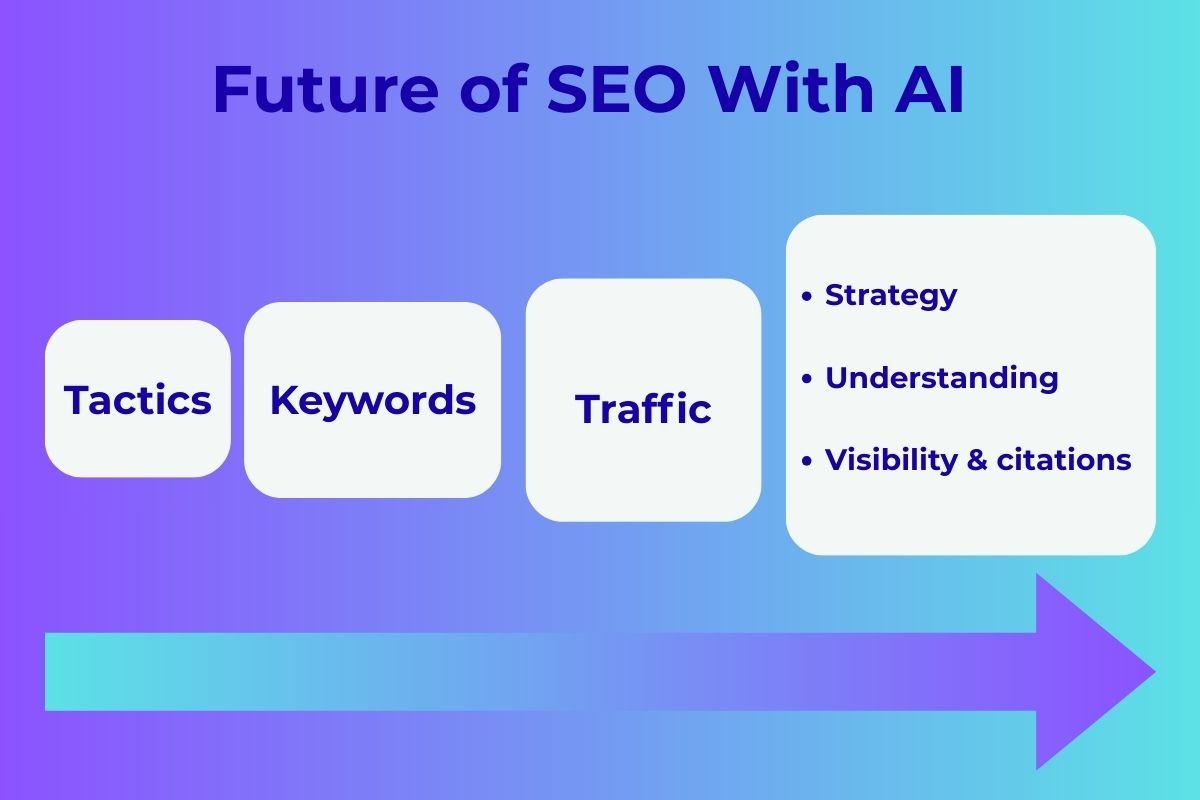
SEO becomes intelligent optimization
Search engines are getting smarter at evaluating content. They are no longer just looking for relevant content. They are looking for understanding. It requires SEOs to think more like product managers or UX designers. It is about solving problems.
Measurability will evolve
The story collapses when the only measure is how many visitors clicked to get to the content. It will become more about how often an AI tool cites your work, visibility, assisted conversions, and brand recall.
Strategy replaces tactics
Tactical SEO exploits will need to adjust. Strategic alignment with what users actually need compounds and builds over time.
This is the real AI impact on SEO future: fewer shortcuts, more substance.
Where to Go Next
SEO is not broken. AI just uncovered the weak and strong tactics to provide clear next steps. Stop trying to optimize for the algorithm and start optimizing for understanding.
Evaluate your content for clarity and strengthen alignment with intent. Cultivate authority through genuine depth, not just scale. This is how SEO remains relevant in the age of AI-first search.
If you're looking for a partner who gets this shift, our Jungle Creatives agency is already helping brands adapt their website, SEO strategies, and overall digital marketing for this new landscape, focusing on what actually works instead of chasing outdated tactics.

%20(1).jpg)