Many businesses experience rapid growth after launching advertising campaigns. Traffic increases, leads start flowing, and revenue follows. The problem appears when budgets tighten. A company that relies too heavily on paid acquisition often discovers that growth disappears almost as quickly as it arrived. Turn off the ads, and the pipeline slows down. In some cases, it stops entirely. This is why the conversation around paid vs organic marketing is not about choosing one over the other. It is about building a sustainable acquisition system that continues generating results even when advertising spend fluctuates.
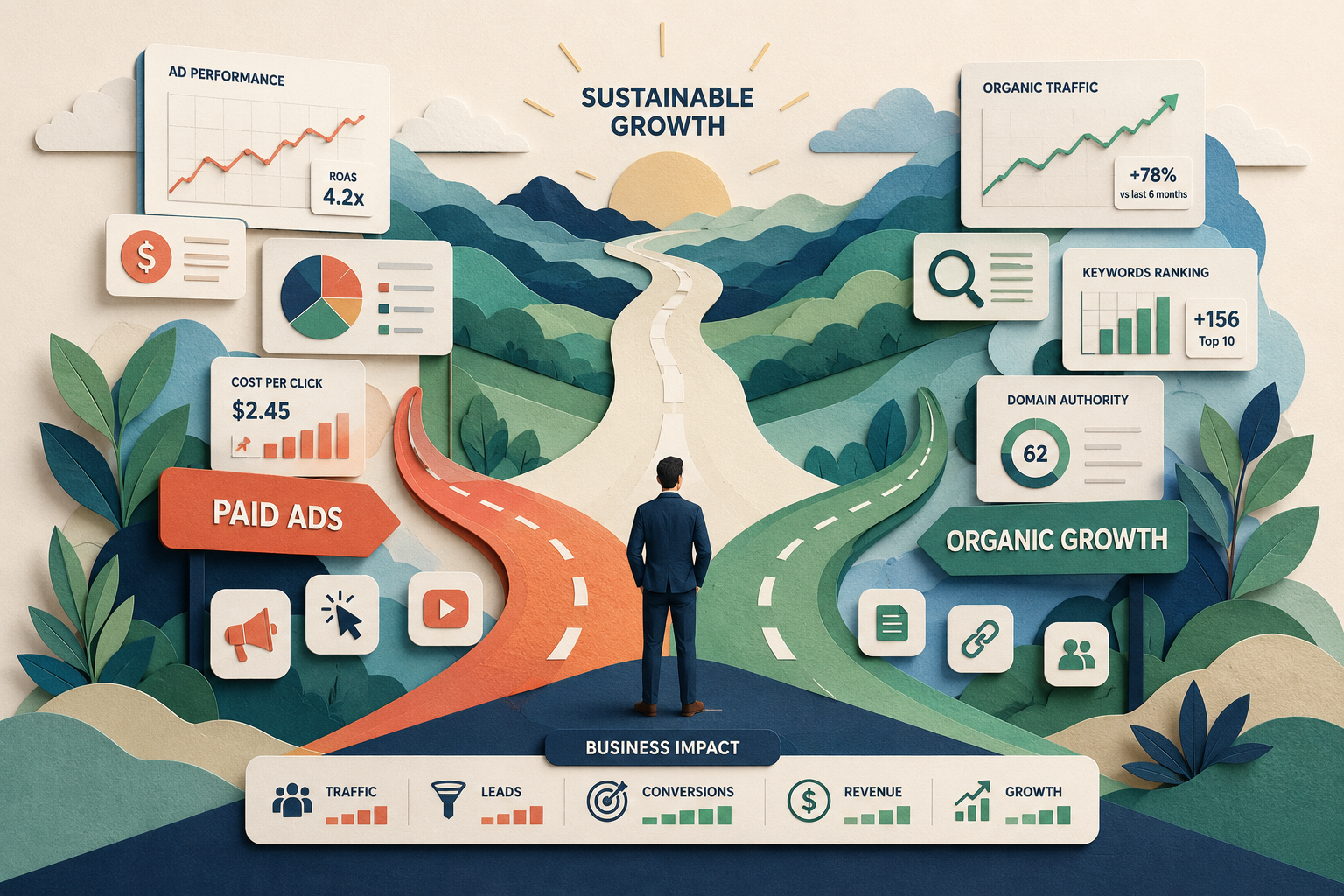
Paid vs Organic Marketing: Understanding the Trade-Off
The strongest businesses rarely depend on a single source of traffic. Instead, they build a resilient channel mix strategy that combines the speed of paid acquisition with the long-term value of organic growth. So, the debate around paid vs organic marketing is often framed as a competition. In reality, paid and organic acquisition solve different business problems. Paid advertising delivers immediate visibility. Organic acquisition builds long-term momentum. One produces quick results. The other creates assets that continue generating value long after the initial investment.
Paid channels help businesses:
- Generate traffic quickly.
- Validate offers and messaging.
- Reach new audiences at scale.
- Launch campaigns with immediate visibility.
Organic channels help businesses:
- Build authority and trust.
- Reduce acquisition costs over time.
- Create compounding growth.
- Strengthen long-term search visibility.
The challenge is that both approaches come with trade-offs. Paid campaigns scale quickly, but costs often rise as competition increases. Organic growth takes longer, but its value compounds over time. A successful channel mix strategy recognizes both realities and uses them strategically.
The Hidden Risk of Paid-Only Growth
Paid advertising remains one of the fastest ways to drive traffic and generate leads. However, businesses that rely exclusively on paid channels often create a fragile growth model. Revenue becomes directly tied to advertising spend, making future performance heavily dependent on budget availability. Several factors contribute to this risk:
- Rising cost-per-click rates.
- Increased market competition.
- Platform algorithm changes.
- Reduced campaign efficiency.
- Economic uncertainty.
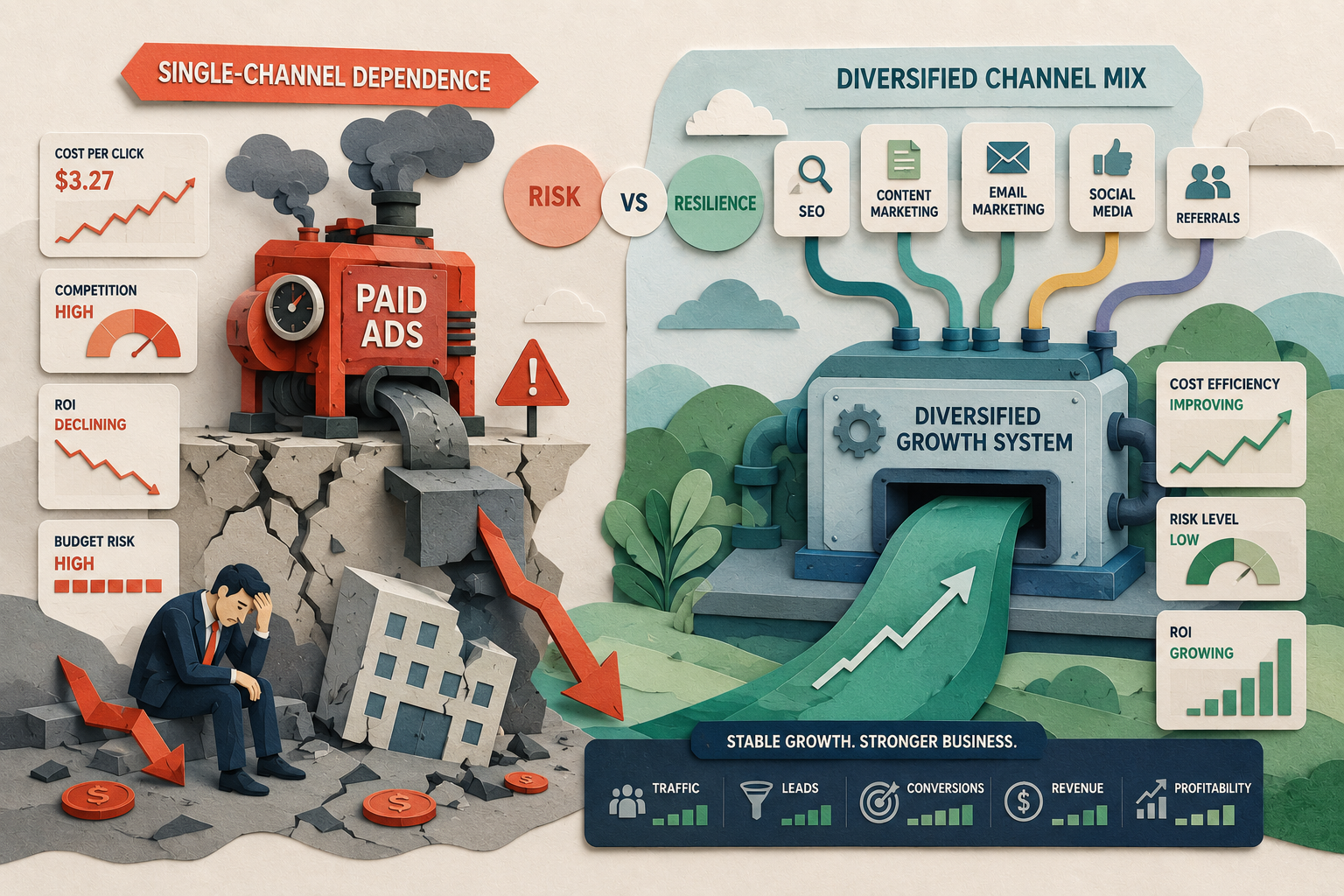
A campaign that delivers profitable results today may become significantly more expensive six months from now. This challenge is one reason businesses continue debating SEO vs PPC 2026 as they evaluate the long-term sustainability of different acquisition strategies. Paid advertising is not the problem. Dependency is. When a single channel becomes responsible for most customer acquisition, the business becomes vulnerable to changes it cannot fully control.
Why Organic Acquisition Creates Long-Term Leverage
Organic marketing operates differently. Rather than renting visibility, businesses gradually build assets that continue producing value over time. Content, search visibility, educational resources, and brand authority can continue attracting visitors long after they are created. Unlike paid campaigns, these assets do not disappear the moment spending stops. This is why many organizations invest heavily in efforts designed to rank your website organically and reduce long-term dependence on advertising platforms. Organic acquisition often contributes to:
- Lower customer acquisition costs.
- Greater brand credibility.
- Consistent website traffic.
- Improved conversion efficiency.
- Stronger long-term profitability.
This does not mean businesses should abandon paid campaigns. The goal is to balance paid and organic acquisition in a way that supports both short-term performance and long-term growth.
Building a Channel Mix Strategy That Survives Budget Fluctuations
A resilient marketing system should perform well in different economic conditions. When budgets increase, it should scale efficiently. When budgets decrease, it should continue generating opportunities. This is where a deliberate channel mix strategy becomes essential. Rather than concentrating resources in a single acquisition source, businesses should build a diversified portfolio of channels that work together. A healthy mix may include:
- Paid search advertising.
- Organic search traffic.
- Content marketing.
- Email marketing.
- Social media.
- Referral partnerships.
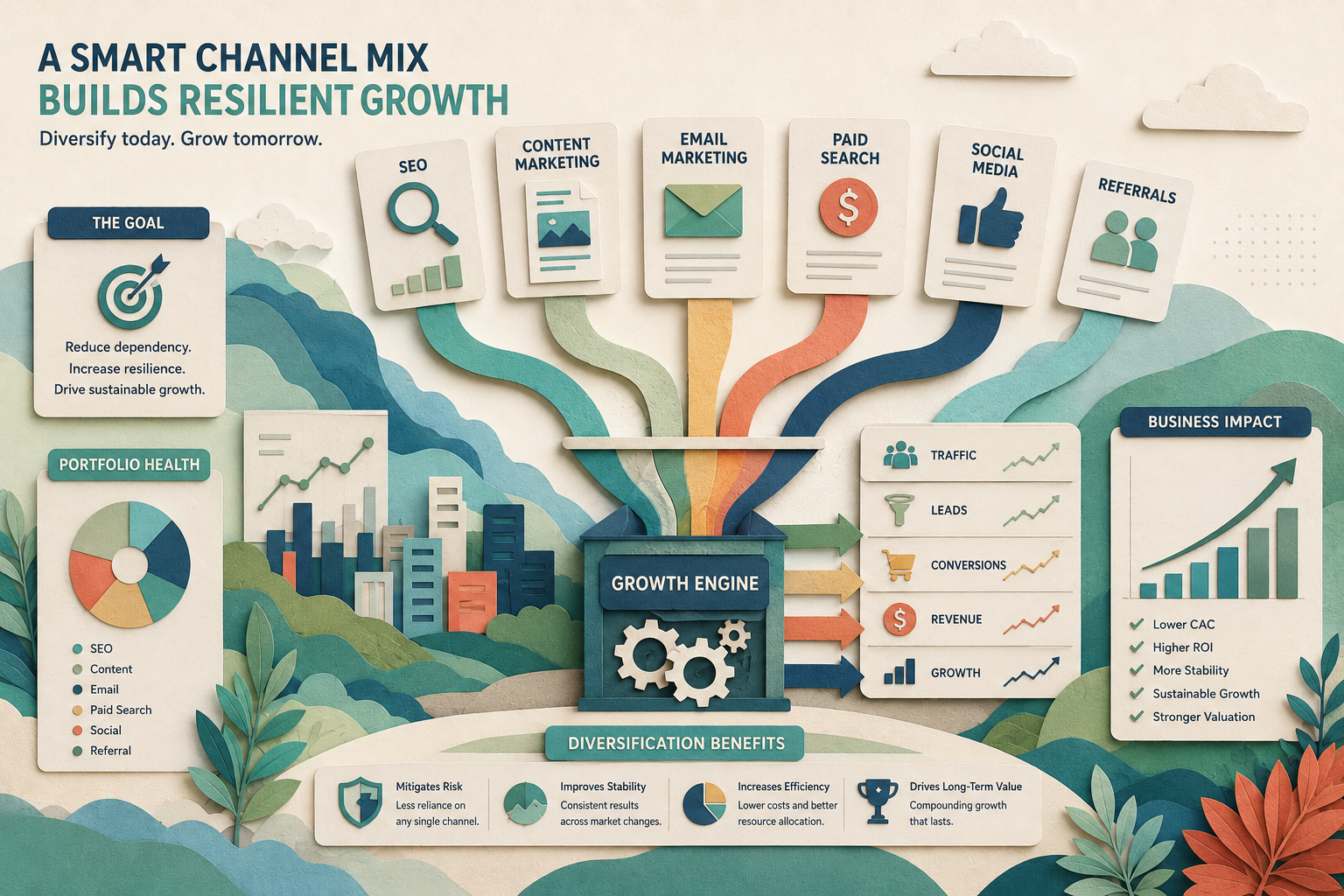
The objective is not equal distribution. The objective is reducing dependency on any single source of growth. When one channel becomes less effective, others continue contributing to business performance. Organizations that invest in multiple channels are generally better positioned to navigate changing market conditions without experiencing dramatic declines in visibility or lead generation.
How Paid and Organic Channels Strengthen Each Other
One of the biggest mistakes businesses make is treating paid and organic acquisition as separate initiatives. In reality, they often perform better together. Paid campaigns generate insights quickly. They reveal which messages resonate, which audiences convert, and which offers generate the strongest response. These insights can then influence content creation, landing page optimization, and broader digital marketing initiatives.
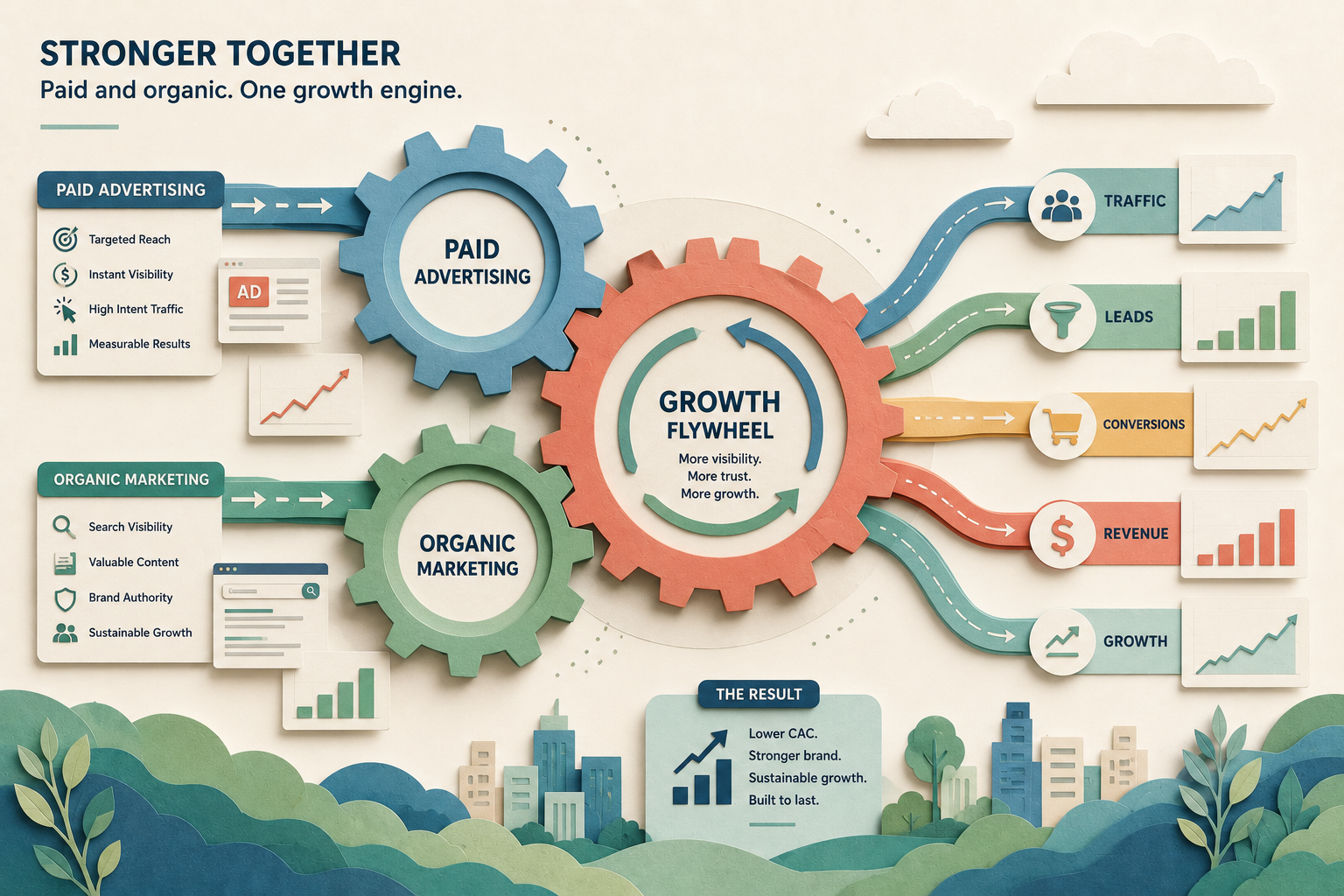
At the same time, organic channels help improve the efficiency of paid campaigns by increasing brand familiarity and trust before prospects ever click an advertisement. Instead of viewing paid vs organic marketing as a choice, successful organizations use both channels to create a feedback loop that strengthens overall performance. The result is a more sustainable growth model that becomes less dependent on any single acquisition source.
Marketing Channel Diversification Is a Strategic Advantage
Too many companies treat acquisition channels as tactical decisions. In reality, they are strategic business decisions. A company that depends heavily on one source of traffic assumes significant risk. If costs increase, algorithms change, or market conditions shift, growth can become difficult to sustain.
This is why marketing channel diversification has become increasingly important for businesses focused on long-term resilience. Diversification does not eliminate risk entirely. What it does is reduce exposure to a single point of failure. Businesses that spread acquisition across multiple channels are often better equipped to maintain growth, adapt to market changes, and protect profitability during periods of uncertainty.
What Does the Right Mix Look Like?
There is no universal formula. The right mix depends on business goals, competition, market maturity, and available resources. A startup may rely more heavily on paid acquisition to build early momentum. An established organization may benefit from stronger organic visibility and lower acquisition costs. Many growing businesses find success by combining both approaches within a structured channel mix strategy that evolves alongside the company.
The key is ensuring that future growth does not depend entirely on one channel. When evaluating paid vs organic marketing, the most important question is not which channel drives the most traffic today. The better question is whether your acquisition strategy remains effective if one channel suddenly becomes more expensive, less profitable, or less accessible.
Is combining both approaches the right choice for you?
The most effective growth systems are not built around a single acquisition channel. Paid advertising provides speed, reach, and scalability. Organic marketing creates authority, trust, and compounding value. Both play an important role, but neither should carry the entire burden of growth alone. The businesses that achieve sustainable results understand that paid vs organic marketing is not an either-or decision. Success comes from combining short-term performance with long-term resilience.
At Jungle Creatives, we help businesses build acquisition systems that continue performing even when budgets fluctuate. Whether the focus is content strategy, search visibility, campaign management, or even broader initiatives such as app development, the goal remains the same: create a marketing foundation that supports growth today without limiting growth tomorrow.

%20(1).jpg)