Launching a website often feels like crossing a finish line. After weeks or months of planning, design, content creation, and testing, the site finally goes live. For many people, that moment signals completion. In reality, it is only the beginning of the website’s lifecycle.
Understanding why website update is important means recognizing that a website is not a static brochure but a living system that interacts with users, browsers, search engines, and security threats every day. Over time, . Performance slows, security risks grow, search visibility weakens, and usability suffers. This is why the importance of website maintenance and the importance of updating the website go far beyond cosmetic changes. Ongoing care is about prevention, stability, and long-term value. And not scrambling to fix problems after they cause damage. Let’s learn more about it.
Why Website Update Is Important After Launch
The internet changes constantly. Browsers update, devices evolve, user expectations shift, and search engine algorithms are refined. When a website stays frozen in time, it gradually becomes incompatible with its environment, and this is a core reason why website update is important long after the initial launch.
Software dependencies such as content management systems, plugins, themes, and frameworks all require updates. Without them, small inefficiencies and vulnerabilities accumulate. These issues rarely announce themselves loudly at first, but they quietly erode performance and trust.
Performance Degradation Happens Gradually
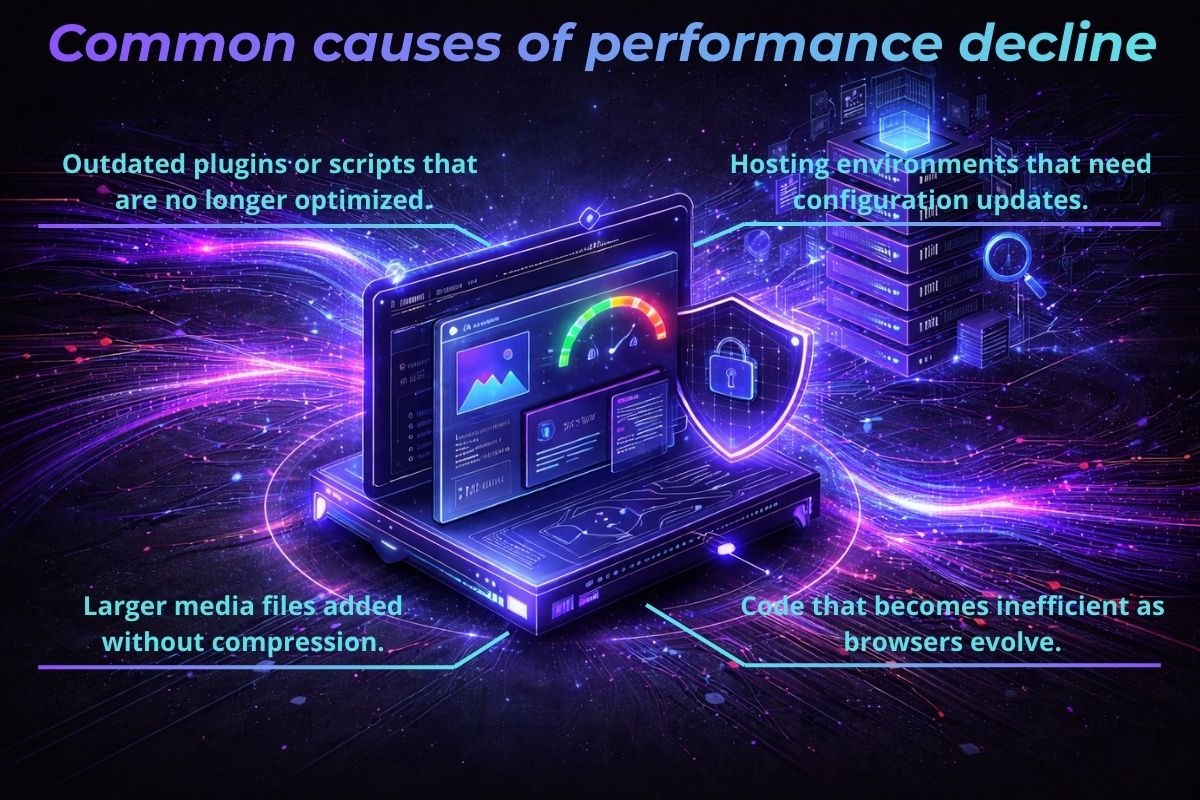
Website performance is one of the first areas to suffer without regular attention. Page speed, load times, and responsiveness may seem acceptable at launch, but they can decline over months or years. Common causes of performance decline include:
- Outdated plugins or scripts that are no longer optimized.
- Larger media files added without compression.
- Hosting environments that need configuration updates.
- Code that becomes inefficient as browsers evolve.
This is where the importance of updating the website becomes very practical. Regular updates keep code aligned with modern standards, reduce bloat, and ensure faster load times. Performance issues that go unnoticed can lead to higher bounce rates and lower engagement before anyone realizes there is a problem.
Security Risks Increase Over Time
Security is one of the strongest arguments for proactive maintenance. Hackers rarely target brand-new websites specifically. Instead, they scan the web for known vulnerabilities in outdated software. Without updates, a website becomes an easier target. Security patches exist to close known weaknesses, but they only work if they are applied. This reality alone explains why website update is important for any organization, regardless of size.
The importance of website maintenance here is not just about protecting data but also about protecting reputation. A compromised website can distribute malware, redirect visitors to harmful pages, or be blacklisted by search engines. Preventive updates significantly reduce these risks and help maintain long-term stability.
SEO Signals Quietly Fade Without Maintenance
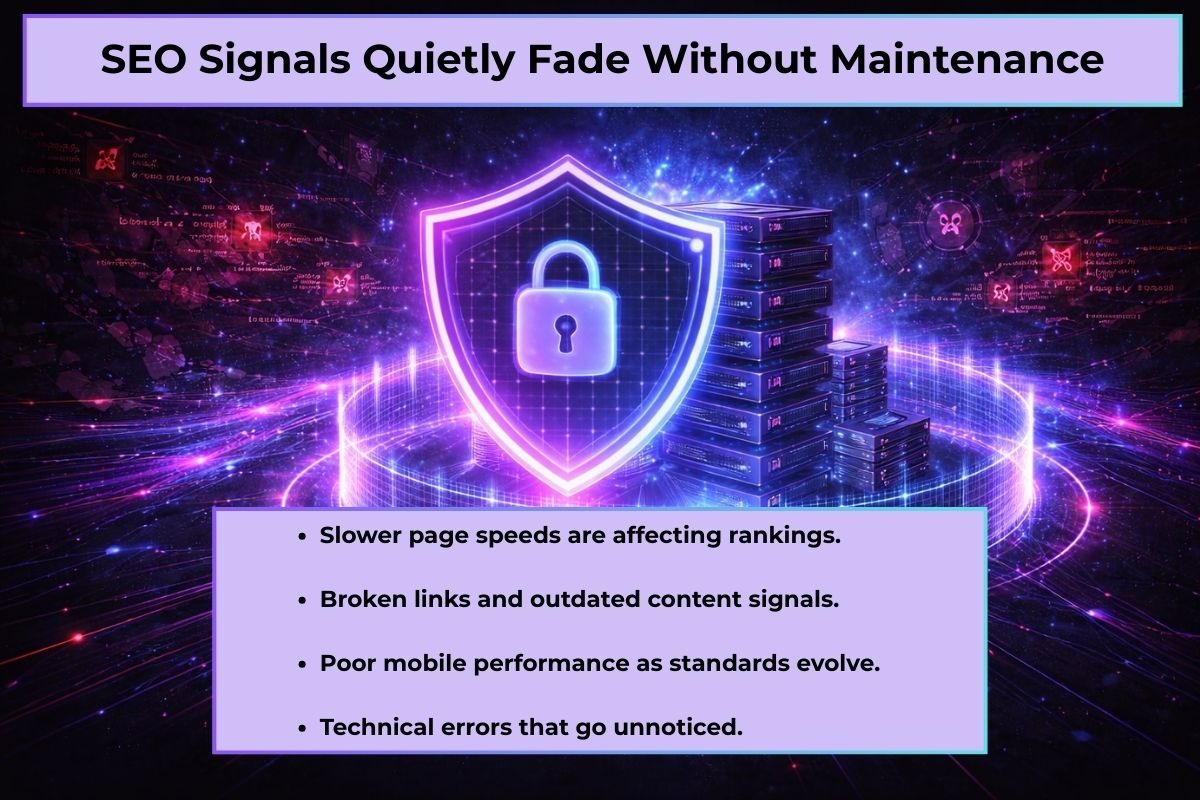
Search engines reward websites that are fast, secure, and relevant. When maintenance stops, SEO performance often declines slowly and silently. Outdated websites may experience:
- Slower page speeds are affecting rankings.
- Broken links and outdated content signals.
- Poor mobile performance as standards evolve.
- Technical errors that go unnoticed.
This highlights the importance of updating the website from an SEO perspective. Updates ensure compatibility with current SEO best practices and help preserve rankings built over time. The importance of website maintenance is especially clear here, because recovering lost SEO visibility often takes far more effort than maintaining it consistently.
Usability and User Trust Are Easy to Lose
Usability issues rarely appear overnight. They emerge as user behavior changes and technology advances. A navigation menu that once felt intuitive may become frustrating on newer devices. Forms may break after browser updates. Accessibility standards may evolve, leaving parts of the site harder to use for some visitors.
This gradual decline reinforces the importance of website updates for user experience. Visitors expect smooth interactions, quick responses, and modern design cues. When a website feels outdated or unreliable, trust erodes, even if the content itself is still valuable. The importance of website maintenance extends to regular usability reviews, ensuring that the site continues to meet audience expectations and accessibility requirements.
Prevention Is Cheaper Than Repair
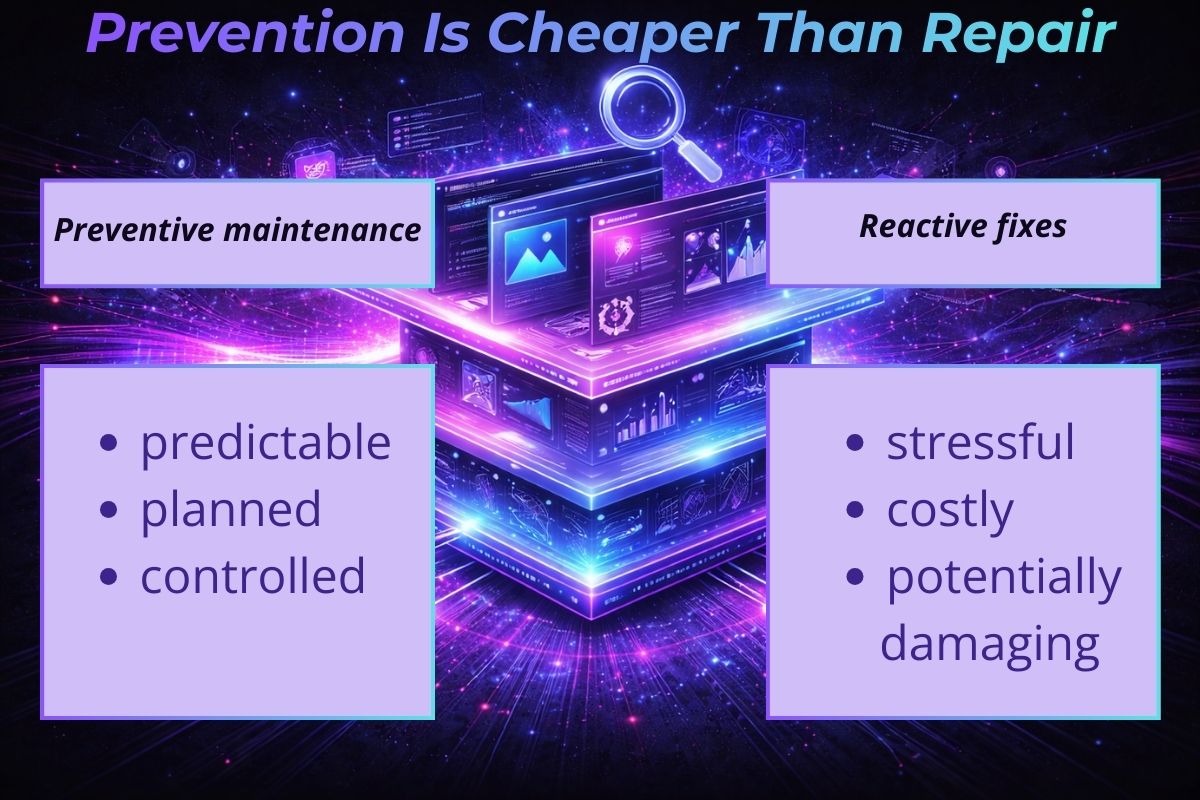
Many website owners delay maintenance until something breaks. Unfortunately, reactive fixes are often more expensive and disruptive than preventive care. Emergency repairs may involve downtime, lost data, or rushed decisions. Here’s a simple comparison:
- Preventive maintenance: predictable, planned, and controlled.
- Reactive fixes: stressful, costly, and potentially damaging.
Understanding the importance of updating website means shifting from a reactive mindset to a preventive one. Small, regular updates reduce the likelihood of major failures and support long-term stability.
How Businesses Approach Long-Term Stability
To better understand how businesses maintain website performance over time, it helps to look at maintenance as an ongoing process rather than a single task. Successful organizations typically focus on:
- Scheduled software and security updates.
- Regular performance monitoring.
- Content reviews to keep information current.
- Periodic usability and accessibility testing.
This structured approach reinforces why website update is important not just technically, but strategically. A well-maintained website becomes a stable digital asset rather than a recurring source of risk.
Maintenance Is Part of the Lifecycle
A website launch is a milestone, not an endpoint. Over time, performance, security, SEO signals, and usability can all degrade quietly if maintenance is ignored. The importance of website maintenance lies in prevention. Protecting what you have already built and ensuring it continues to serve its purpose. Recognizing the importance of updating the website helps shift focus from short-term success to long-term stability. When updates are treated as a natural part of the website lifecycle, businesses avoid costly disruptions and preserve user trust. Ultimately, understanding why website update is important is about ensuring that a website remains effective, secure, and relevant long after launch day.

%20(1).jpg)