Headless CMS platforms changed how businesses handle content across multiple online platforms. The same content now appears across mobile apps, ecommerce platforms, customer portals, smart devices, and AI-powered tools.
Because of that, large businesses started moving away from traditional CMS systems and toward multi-use setups - which is what headless CMS offers.
What Is a Headless CMS?
Simply put, a headless CMS separates content management from the frontend - the visual part of the website. The CMS stores and manages the content, while the frontend controls how that content appears to visitors.
Instead of keeping both parts connected inside one system, APIs (systems that send content from the CMS to websites, apps, and other platforms) distribute the content wherever it needs to appear.
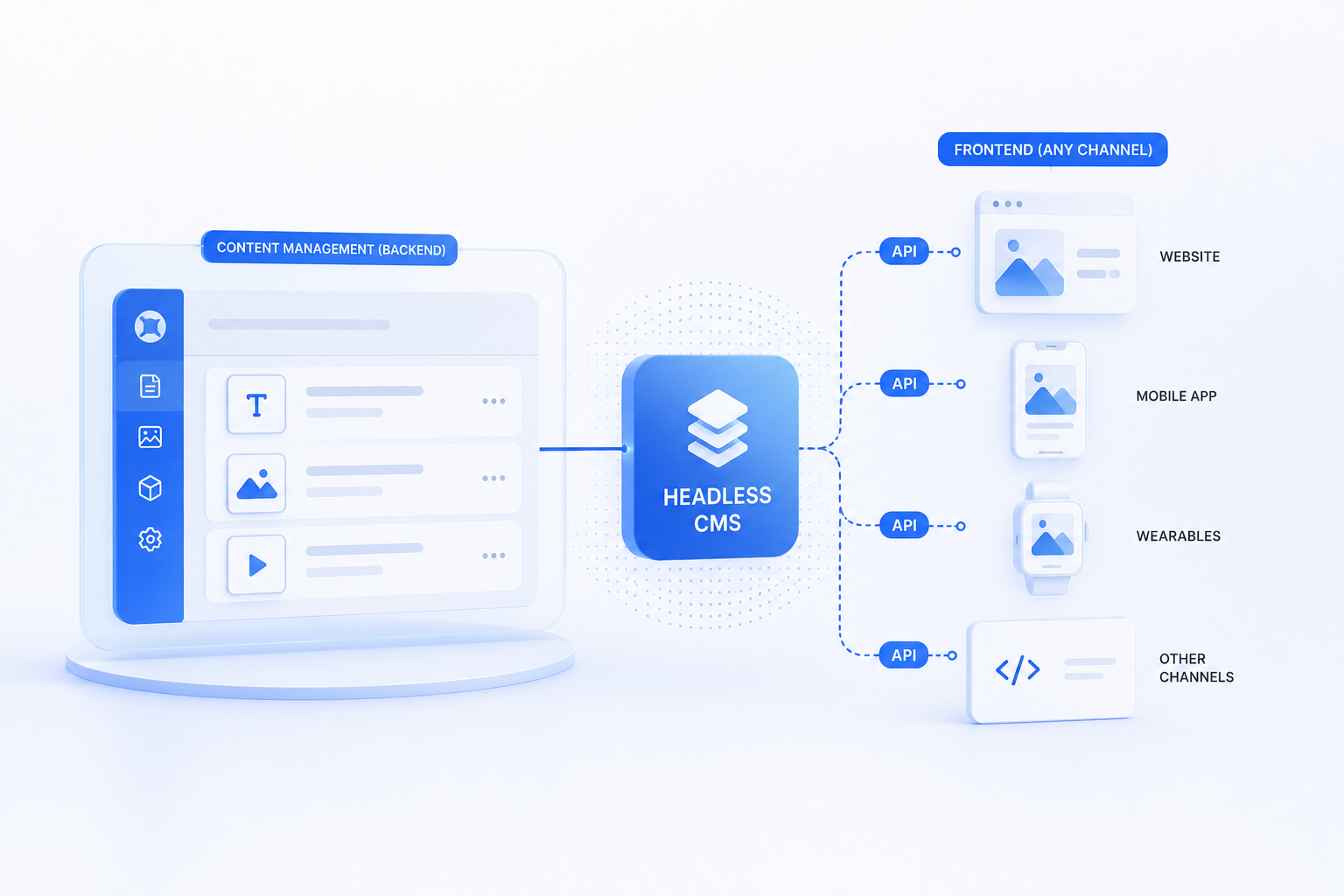
To better understand what headless CMS is, imagine publishing a blog article inside the CMS. That same article can then appear on:
- the website,
- mobile app,
- online store,
- smartwatch app,
- or AI-powered search platform.
Basically, headless CMS platforms exist because large businesses no longer publish content only to a single website. A traditional CMS mainly delivers content to one website frontend, while a headless CMS distributes content across multiple digital platforms from one central CMS. This is known as omnichannel content delivery.
How Content APIs Work
As it’s previously mentioned, APIs act like delivery systems that send content from the CMS to websites, apps, and other digital platforms.
Instead of building content directly into one website, a headless CMS stores the content in one place, while APIs distribute it wherever it needs to appear.
That’s how a business can publish one product description, blog article, or announcement inside the CMS, then display that same content across the website, mobile app, online store, smartwatch app, or digital kiosk.
That setup removes the need to rewrite or manage the same content separately for every platform.
Headless CMS vs Traditional CMS
Traditional CMS, like WordPress, keeps content management and website design inside the same system. You write content, manage pages, and control the website layout from one connected dashboard.
A headless CMS such as Objectic separates those parts. The CMS manages the content, while the frontend gets built separately and displays the content through APIs.
The difference between headless vs traditional cms becomes easier to understand through practical use:
Headless CMS Benefits
In addition to multichannel content delivery, headless CMS platforms give more control over website speed, frontend design, and content distribution across different digital platforms.
Because the frontend operates separately from the CMS, developers can redesign websites, improve loading speeds, or build custom layouts without rebuilding the entire content system.
Businesses trying to avoid cheap websites often invest in better performance, and long-term flexibility, which is why headless CMS platforms attract larger digital brands.
Headless CMS platforms also simplify the management of:
- multilingual content,
- large ecommerce catalogs,
- mobile platforms,
- and reusable content sections.
One of the growing headless CMS benefits comes from AI-ready content organization.
Instead of locking information into long static pages, headless CMS platforms separate content into smaller reusable sections. That makes the content easier for AI search engines to process, extract, and display as standalone answers across AI-powered search results.
When Headless CMS Makes Sense
Knowing when to use headless CMS depends on whether the business publishes content across multiple platforms or relies mainly on one website.
Businesses managing websites, mobile platforms, and app development projects benefit more from headless CMS flexibility than businesses operating a single website.
For example, a SaaS company may need the same content to appear across the marketing website, customer dashboard, mobile app, help center, and AI-powered support assistant.
Running all that from one CMS becomes much easier when the content is not tied to a single website frontend.
The same applies to multilingual businesses. Instead of rebuilding pages separately for every platform or language, headless CMS platforms simplify content updates across different platforms from one central system.
Headless CMS for Ecommerce
Headless CMS becomes useful for ecommerce when online stores manage large product catalogs across websites, mobile shopping apps, marketplaces, and other digital platforms.
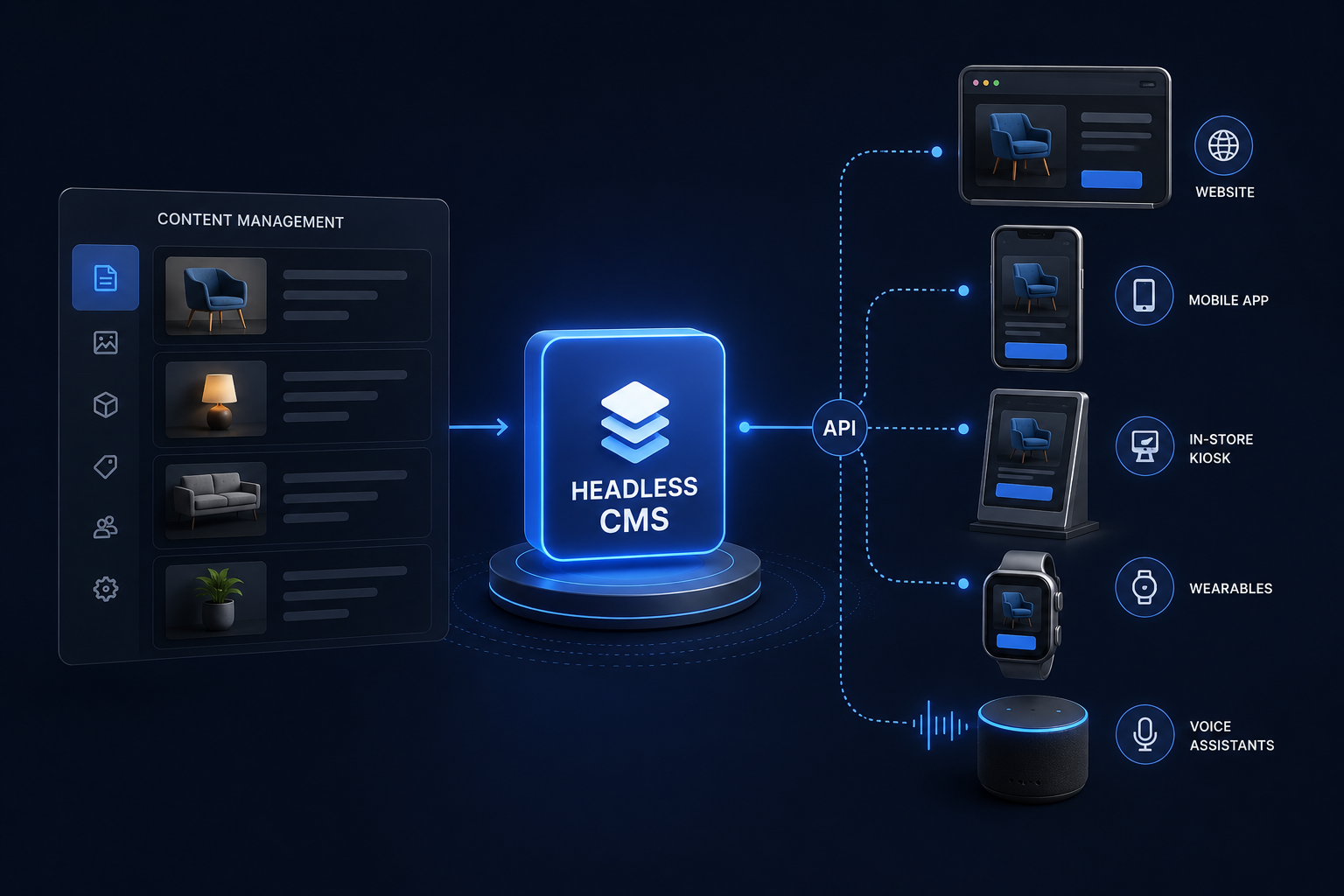
Instead of managing product content separately for every channel, businesses can update product descriptions, pricing, categories, and promotional content from one central CMS.
The setup also gives ecommerce brands more freedom over storefront design and shopping experience. Developers can build faster product pages, custom storefronts, mobile-first layouts, and more flexible checkout systems instead of relying on fixed ecommerce templates with limited customization.
Headless ecommerce platforms also support:
- personalized shopping experiences,
- multilingual storefronts,
- and product content appearing consistently across different devices and platforms.
When Headless CMS Becomes Overkill
Smaller businesses running a simple but well-developed website often don’t require headless architecture.
Since headless setups also involve separate frontend management and ongoing maintenance, smaller teams would need additional developer support to keep the website running properly.
For example, a local plumbing company may use its website mainly for service information, appointment requests, and local SEO. In that case, headless architecture can become unnecessary overkill because the business would end up dealing with:
- higher website costs
- paying developers whenever the website design changes
- extra maintenance connecting the CMS and website frontend
In that case, a traditional CMS would often handle the business needs more efficiently.
We At Jungle Creatives Can Help
Headless CMS platforms give businesses more freedom over how content appears across digital channels. For larger brands managing multiple platforms at once, that flexibility can make content updates and long-term growth much easier to handle.
However, headless architecture also comes with more maintenance, development work, and higher costs. Smaller businesses running one standard website often get better results from a traditional CMS that stays simpler to manage.
The right choice depends on how the business publishes content, how many platforms it manages, and how much flexibility the website actually needs.
Whether you need a headless or traditional CMS architecture, we at Jungle Creatives can help you build a platform that matches the way your business actually grows and publishes content.

%20(1).jpg)