Identifying the root cause of stalled brand growth can be challenging. It is commonly attributed to issues such as low traffic, ineffective strategies, or insufficient technology. However, the cause is likely the brand's growth itself. The most effective strategies account for the numerous facets of branding that go beyond an outward appearance. Effective brand strategies contribute to the sentimental and value-based perceptions of a company. By understanding and improving the brand, a company can positively shift perceptions and value, creating the opportunity to optimize prices before implementing any performance marketing.
This article describes the most effective strategies for understanding the value of brand sentiment and correcting misalignment with brand purpose, and effectively constructing and maintaining brand value over time, rather than allowing it to diminish with subsequent redesigns.
Branding as the Growth Infrastructure, Not a Visual Upgrade
Leading companies understand that effective branding is not a creative expense. Effective branding creates a system that drives all other initiatives: sales, advertising, partnerships, etc. When that system is weak, company growth is adverse.
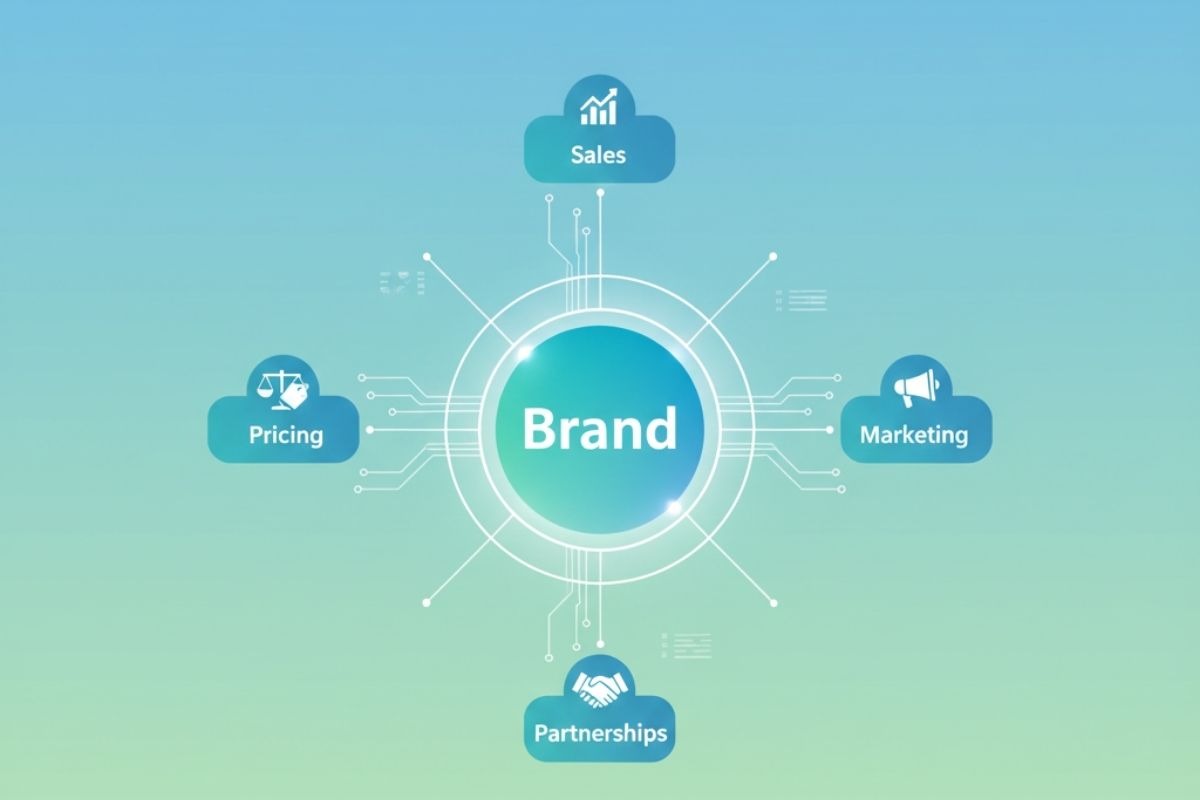
Most successful entrepreneurs can identify four ways a strong branding impact shows up in their financial results:
- Trust velocity is the speed at which customers feel positive about selecting you.
- Positioning clarity is the extent to which you dominate a market segment.
- Perceived value is the extent to which customers believe you identify and meet their needs.
- Pricing flexibility is the level at which you can set prices without significant customer resistance.
When branding is effective, marketing is a smooth process. When branding is ineffective, no marketing strategy or campaign is effective, especially in the long run.
Why Branding Gets Misunderstood
Designs such as a logo, color schemes, and a brand's communication style can describe a brand. While important, they are just the surface of branding. The real branding impact lays in the company's underlying strategies
There are a few common misconceptions:
- Only large businesses can brand themselves.
- Branding must occur as a business identifies market-relevant products.
- Branding does not influence conversions.
- Branding is inherently ambiguous and subjective.
The reality is that effective branding transforms every marketing tactic and strategy you use. If you focus on branding, you will unlock additional growth potential (or, in most cases, you will actually unlock growth potential!).
How Brand Strategies for Growth Work
Strong brand strategies for growth align internally and externally. That alignment minimizes friction at all stages of the funnel and reinforces consistency at all touchpoints.
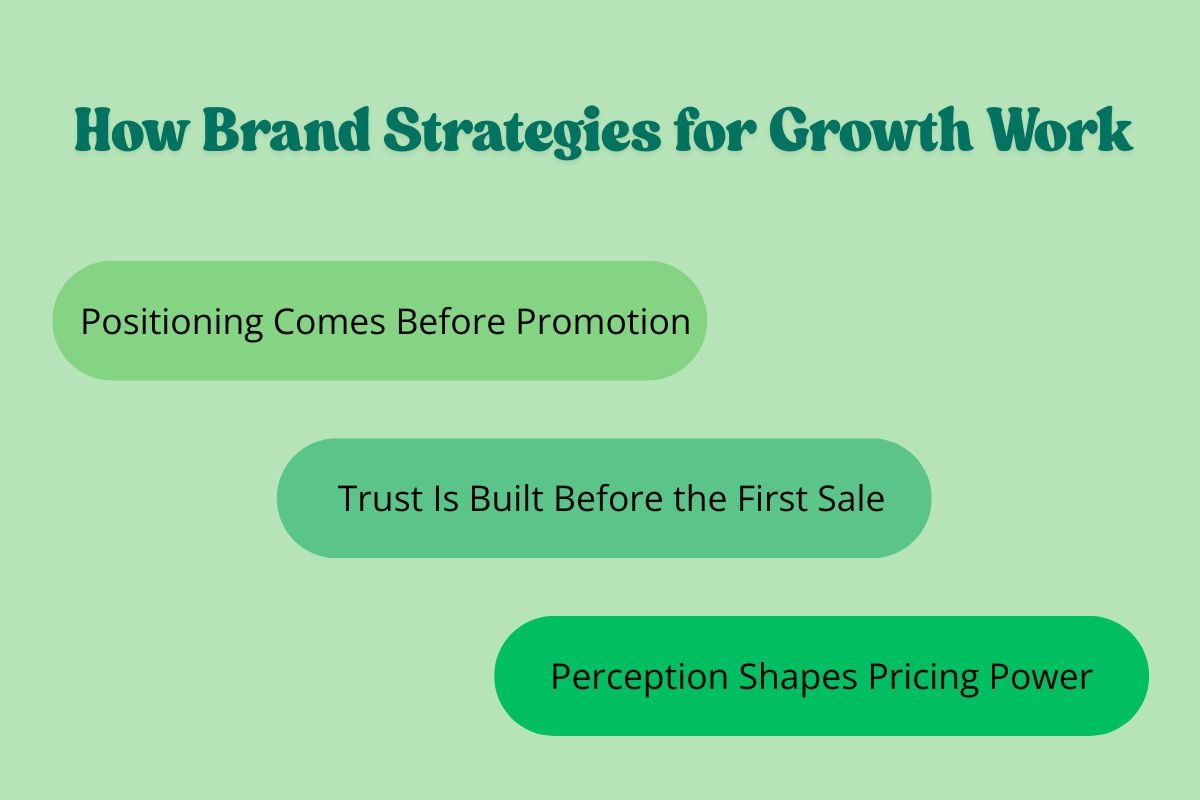
Positioning Comes Before Promotion
You've got to nail positioning before you start promoting anything. Brand strategy and positioning spell out what you stand for, who you actually are, who you are for, and why anyone should care about you in a market that's already packed. Without that clarity nailed down, your promotions just add to the noise.
Good positioning answers the following three questions.
- Who is the brand not for?
- What problem do you own better than anyone else?
- Why does your solution feel different and believable?
Skipping these questions creates room for competing on price features, which kills margins and erodes trust. Trust erodes over time; it never happens at a sale, checkout, or conversion. Trust starts through consistency and clarity.
Trust Is Built Before the First Sale
When trust is in place:
- Sales cycles get shorter
- Objections drop off
- Repeat purchases increase
Trust is built long before the first sale; it starts from consistency and clarity, across all the verticals, from messaging to visuals.
Perception Shapes Pricing Power
In relation to perception, pricing abuse means you have a small brand problem, but a big problem indeed.
When pricing perception is weak, people focus on the price itself, while in situations where the perception is strong, they get focused on the value behind the price.
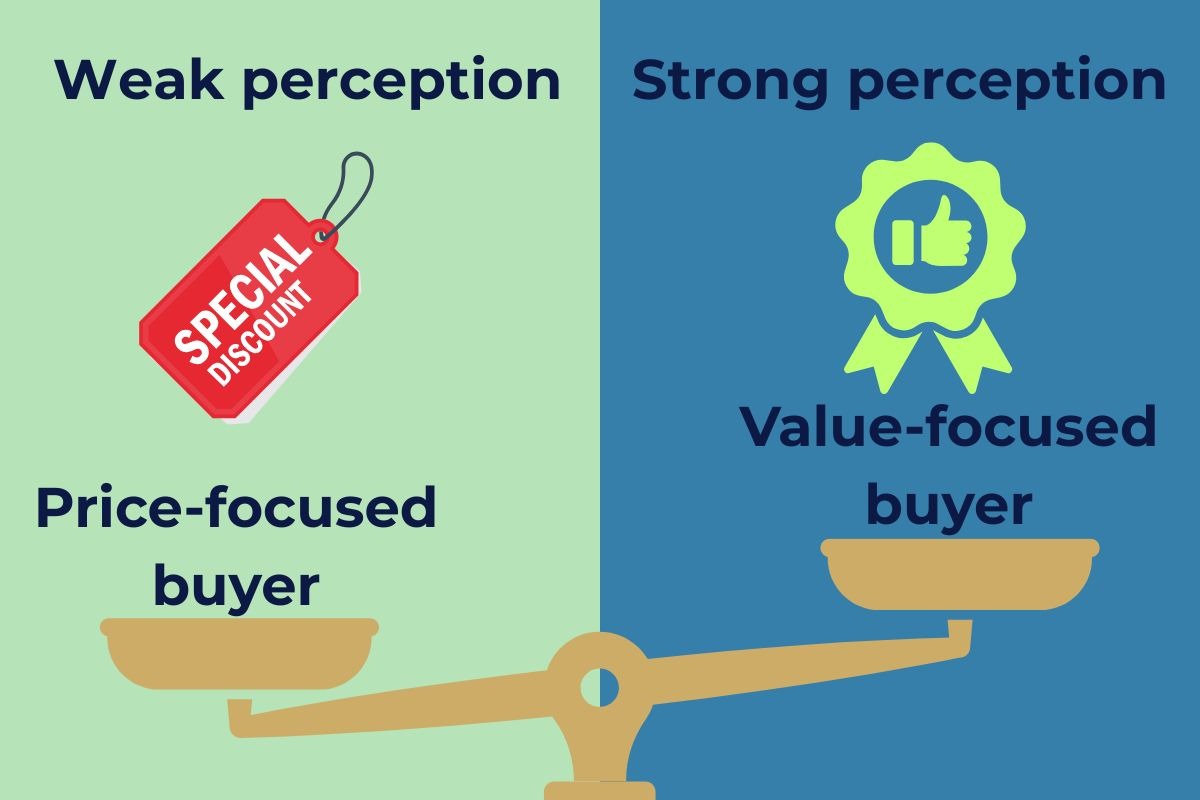
Powerful brands can:
- Charge more for commodities
- Eliminate dependence on promotion
- Maintain profitability when there is less competition
The greatest indicator of your brand's impact is that you can set your own prices.
The Challenges of Scaling a Business Brand
Businesses at the growth stage tend to outgrow their brand and are often not aware of it. What was innovative at inception begins to disintegrate with an increase in size and scale.
The Most Common Challenges Impacting Brand Development
There is a clearly defined absence of these patterns in a brand's presence that most are lacking:
- Communication centered on features, not on customer benefits
- Visuals that are out of sync with the current brand
- Inconsistency in the voice of marketing and sales
- Unattainable brand promises
Branding issues are often not referred to as such in your reports. Instead, they are simply the symptoms of higher acquisition costs, lower close rates, or a lack of referrals.
The Dangers of Tactics-First Marketing
There is undoubtedly short-term success and long-term damage in running disjointed brand messages through ads or content. Campaigns may each be effective for short-term goals, but the brand fails to compound.
With no defined brand strategy and positioning, growth is about spending rather than building trust.
What Role Does Branding Play In The Growth Of Digital Agencies?
Successful digital agencies focus on the brand as a growth lever. For Jungle Creatives, the brand is the foundation for performance marketing, not something you add after the campaigns are live.
This means focusing on:
- Identifying and positioning your brand in the market before selecting the marketing channels you want to use.
- Creating messaging frameworks aligned with the customer’s core concerns.
- Developing scalable brand systems that are consistent across your advertisements, content, and sales conversations.
The outcome is an acceleration in growth for your agency instead of the brand slowing it down.
How to Measure the Impact of Branding Without Guessing
Branding is often referred to as 'unmeasurable', largely because the wrong variables are being measured.
Indicators of Impact from Strong Branding
Operational indicators signal that 'branding' is working, rather than focusing on vanity metrics:
- Higher conversion rates without an offer change.
- Increasing average order value over time.
- Faster sales cycles.
- Greater quality in inbound leads.
These are indicators that perception and trust are, in fact, improved, even before your awareness numbers spike.
Even Metrics Are Important
The direction you take, e.g. a brand lift study, audience sentiment, and message testing, is all forms of branding data. The brand impact is, however, clearly seen in the efficiencies. When branding is working, marketing is simply effortless.
The Insider Tip Most Companies Overlook
The best strategies for brand growth start from objections, not aspirations.
Instead of writing about how you want to sound, you can start with:
- Why does your audience hesitate
- What your competitors promise they won’t deliver
- What the audience is apprehensive about
Then create brand messaging that calms these concerns before a single person even brings them up.
This analysis creates a form of trust that is super unconscious. Prospects will feel understood before you even attempt to sway them with your words. This will drastically increase your conversion rate without aggressive selling.

%20(1).jpg)