Creating campaigns that drive traffic, generate leads, and build brand loyalty is what digital marketing is about. However, a true marketing strategy provides real results if it complies with the systems that drive consistent revenue growth. The goal of digital marketing is not about multiplying activities, but using those activities to generate growth.
Running campaigns and tracking a bunch of metrics that are dashboard-worthy is what keeps most teams busy, while revenue remains the same. The issue is marketing activity not resulting in revenue. This is the most common issue businesses face.
Contemporary digital marketing and growth are built on the ability to see and approach opportunities differently. As a business owner, you are trying to execute marketing through tons of different tactics and juggling dozens of platforms. But what are you ultimately trying to achieve? When you begin with that answer, the rest tends to take shape quite differently (this is when most business owners tend to hire marketing agencies, instead of doing everything on their own).
What Real Growth Means for Digital Marketing
Increasing revenue, increasing customer retention, and increasing customer lifetime value are the pillars of true sustainable growth. Marketing should drive all of these simultaneously. Brand awareness, social following, and short-term sales spikes from campaigns do not (directly) contribute to sustainable growth. Real growth is measured by metrics that predict and drive meaningful business results - leads, sales, and potential clients.
A sound strategy focuses on three specific aspects outlined below:
- The impact on revenue and traffic
- Building systems that grow in strength
- Ensuring marketing actions are aligned with business objectives
The bottom line is that traffic alone doesn't pay anyone's salary. Low-quality leads zero out your sales team's effectiveness. Engagement without conversion just feeds false confidence.
Growth-driven digital marketing integrates all channels around a single purpose. Your website goes after SEO. Your ads go after clicks and conversions. Email marketing goes after nurtured leads, and the website speaks to the leads to qualify them.
This is the foundation. Not marketing that is simply getting louder, but marketing that is getting smarter.
Where Most Teams Get Stuck: Activity vs Outcomes
How many times have you looked at marketing boards filled with nice stats? Impressions, likes, reach, and sessions. These metrics are easy to conjure, and definitely are important. However, for business owners and decision makers, the decisive metrics are the ones that actually show the revenue metrics, campaign ROAS, and attribution metrics.
The Challenges of Activity-Based Marketing
The most comprehensive activities of marketing are activity-based marketing:
- Scheduled content calendars are published
- Ads are placed without defined conversion goals
- Social media content that is published on a timed basis
All of these activities create a high level of marketing activity that will make your team feel productive. In truth, without an underlying business goal, these activities are completely pointless (unless conducted with a clear perspective of what’s to be achieved)
The Reformulated Questions of Outcome-Based Marketing
Marketing that is based on outcome gets a little more sophisticated:
- Once visitors are on the site, what particular action do you want them to take?
- What tangible change is this marketing effort going to make to the pipeline or revenue?
- What is the most important metric to take at this particular moment?
By addressing these questions, your outcome-based marketing shifts the focus toward the principles of sustainable growth. Every activity from each channel must achieve a direct and tangible outcome for the business (if it is to be justified).
It is not enough for a blog to achieve Google ranking success, although ti helps a lot. It needs to attract the right crowd. Primarily from the conversion perspective, but secondarily to support and ‘push’ the conversion pages and posts up. A campaign doesn't just have to be launched on schedule. It has to provide evidence through post-launch assessment that the behaviors it drives are profitable.
The Pivot to Scale: Systems vs Campaigns
While campaigns will always have an endpoint, systems will always have the capacity to evolve. It means that paid campaigns are important, but the marketing vision and the strategy are actually what driveS growth, given that all marketing channels and all campaigns are (or at least should be) a part of the bigger strategy.
You can temporarily improve your metrics through short-term paid campaigns, but they don’t create lasting growth. When you pull back on your investments, results completely disappear.
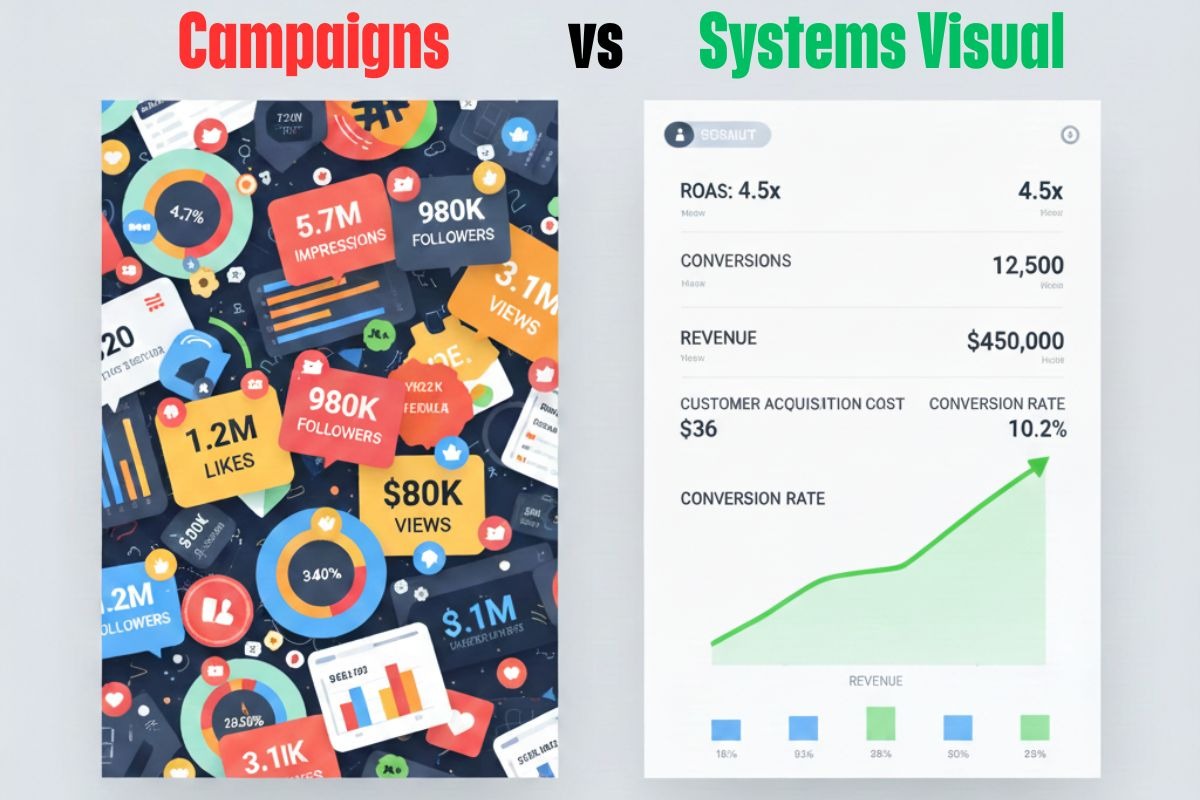
In a growth strategy, there is a digital marketing system built to accumulate value over time.
Revenue-Driven Marketing: The Only Metric That Matters
Let’s not mince words: the only marketing that matters is when growth is a function of revenue, and not just the volume of traffic.
The modern growth teams correlate marketing activities directly to revenue metrics:
- Customer acquisition cost (how much do you spend to bring a new customer?)
- Lifetime value (how much revenue does each customer bring you in the duration of their relationship with you?)
- Conversion rate per funnel stage (how many move from one stage to the next?)
This approach addresses a recurring concern of business owners: how digital marketing helps in business growth, other than creating awareness?
Marketing contributes to business growth when it:
- Lowers customer acquisition cost (using organic demand – when customers discover you through a search)
- Increases the conversion rate (through better messaging and user experience)
- Increases the value of each customer (through retention content and smart upselling)
A good marketing approach to growth begins with building a granular understanding the customer journey, the decisions they make, and the factors that drive them to convert. The order of the platforms you use, the order of the tools you select, all come second.
Creating a Practical Growth Marketing Framework
An effective growth marketing framework does not chase trends or innovations. It follows a clear, repeatable structure.
Defined Growth Goal
Growth goals need to be quantifiable. They cannot be vague. For example, goals cannot simply state, “increase traffic,” but rather state, “increase qualified demo requests by 25 percent in the next quarter,” specifying a goal.
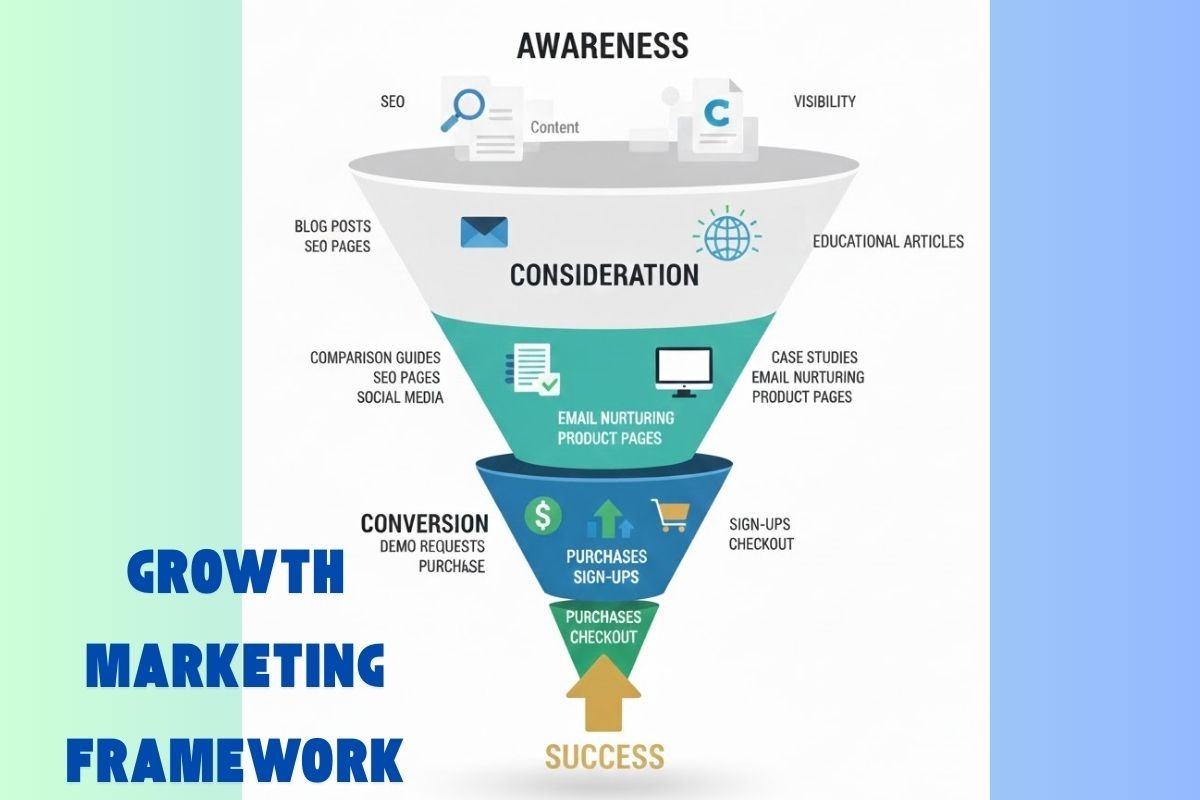
Defined Funnel Stages
Each step in the buyer's journey must be defined clearly. These include:
- Awareness: content that attracts the right audience (not just any audience)
- Consideration: assets that address their specific objections and concerns
- Conversion: points that are made to facilitate taking action
Prioritized Channels
Not every channel deserves to be optimized in the same way. Invest the attention and resources where buyers are showing intent. In particular, search marketing, email, and paid acquisition outstrip broad social media.
Iterate
Growth is never “done.” Conversion rate optimization and funnel analyses are never-ending cycles.
This structure keeps your digital marketing growth strategy focused on actual impact rather than just trying to be newsworthy.
Pro Tip That Most Teams Miss
This is the insight that distinguishes the experienced growth teams, and it’s quite simple.
Always look at the micro-conversion before the macro-conversion.
Most teams only track final touchpoints, purchases, booked calls, and signed contracts. Growth teams track earlier signals of intent:
- How far do people scroll on your most important pages?
- How much time do they spend on pricing pages or comparison content?
- Do they repeat visits in a short time frame (like coming back three times in one week)?
These signals help predict revenue, even before it happens. Optimizing for these signals will help grow your business faster than simply waiting for those final lagging indicators.
This technique augments and strengthens any growth marketing framework, offering a true competitive advantage that most of your competitors likely won't consider.
Where Agencies Fit Into a Growth Strategy
Execution matters, of course. But alignment matters even more.
A good agency partner tends to your business challenges and translates those into scalable systems. Agencies like Jungle Creatives excel at bridging strategy, execution, and measurement, rather than simply chasing shallow metrics that are good for reporting but not for business advancement.
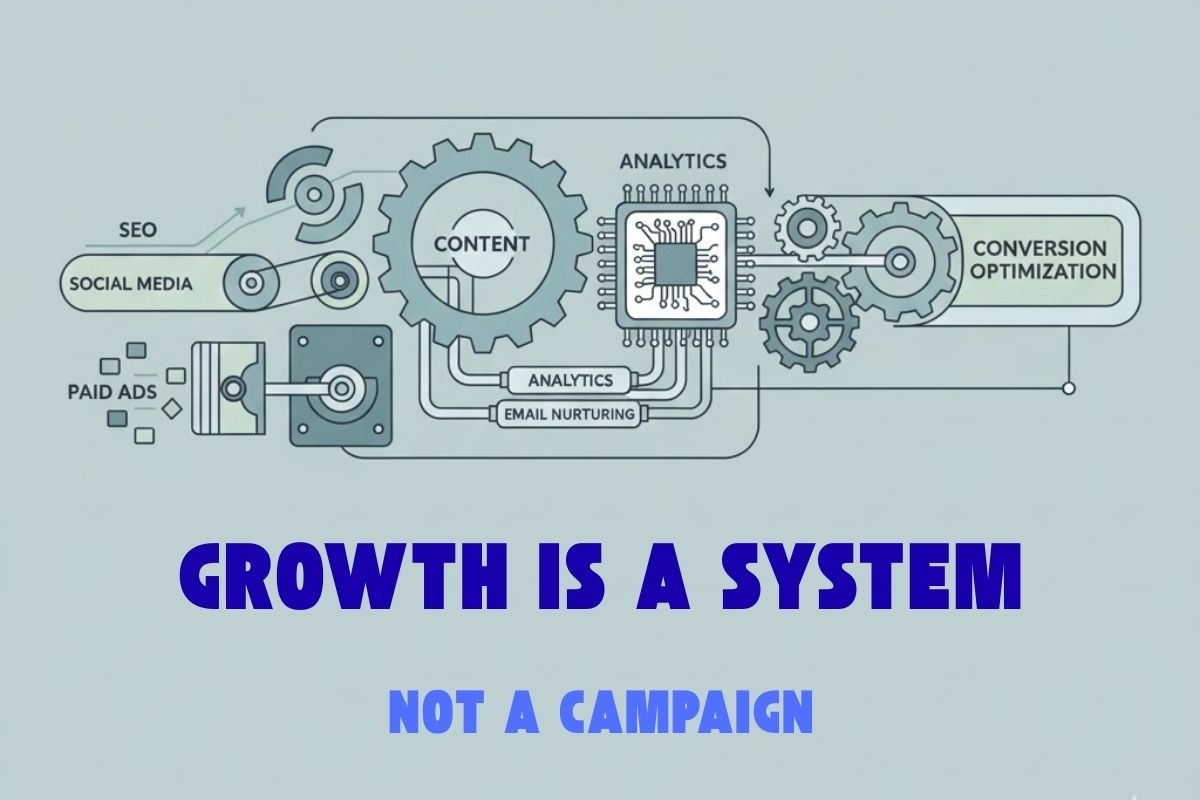
The real value isn’t in running more campaigns. It’s in building better marketing engines that improve over time and compound results.
Turning Strategy Into Sustainable Growth
Growth is not about adding more tasks or activities to your to-do list. It is about doing the tasks that actually matter.
Modern digital marketing strategies are outcome-based, not activity-based. They focus on building sustainable systems and not one-off campaigns. They regard revenue generation as the ultimate objective. This means that digital marketing teams construct performance engines instead of getting involved in pseudo-activity, which might look good when presented in a report, but has no real contribution to business growth.
The next step requires you to do a growth audit on your activities. This means you have to stop doing anything that does not result in tangible outcomes. Make growth your focus, and it will be the result of your compounding activities. This is the starting point for real growth.

%20(1).jpg)